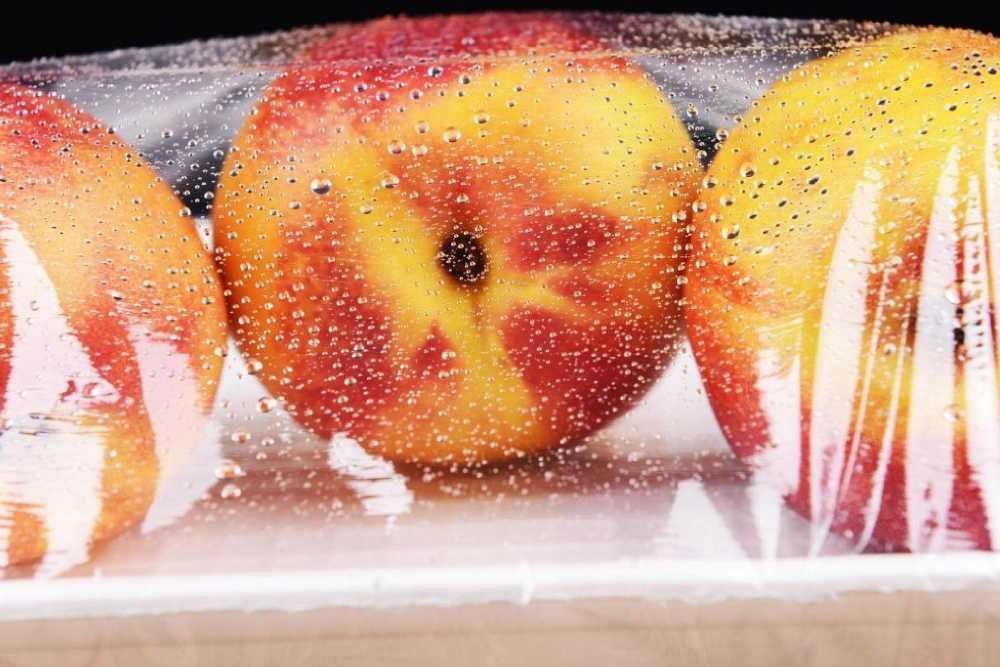
The term “fogging” in plastic films describes the condensation of water vapour, which is caused by variations in surface tension between the polymer surface and the water droplet, on the surface in the form of small discrete droplets. Fogging can happen when the air around the film cools down to a point where it can no longer hold all the water vapour, causing excess water to condense on the film (“hot fogging”). Alternatively, fogging can occur when the temperature on the inside surface of the film drops below the dew-point of the enclosed air/water vapour mixture. Fogging has an impact on light transmission in agricultural settings like greenhouses. It also results in crop burns from the lens effect of the droplets and a constant water leak.